
Materia
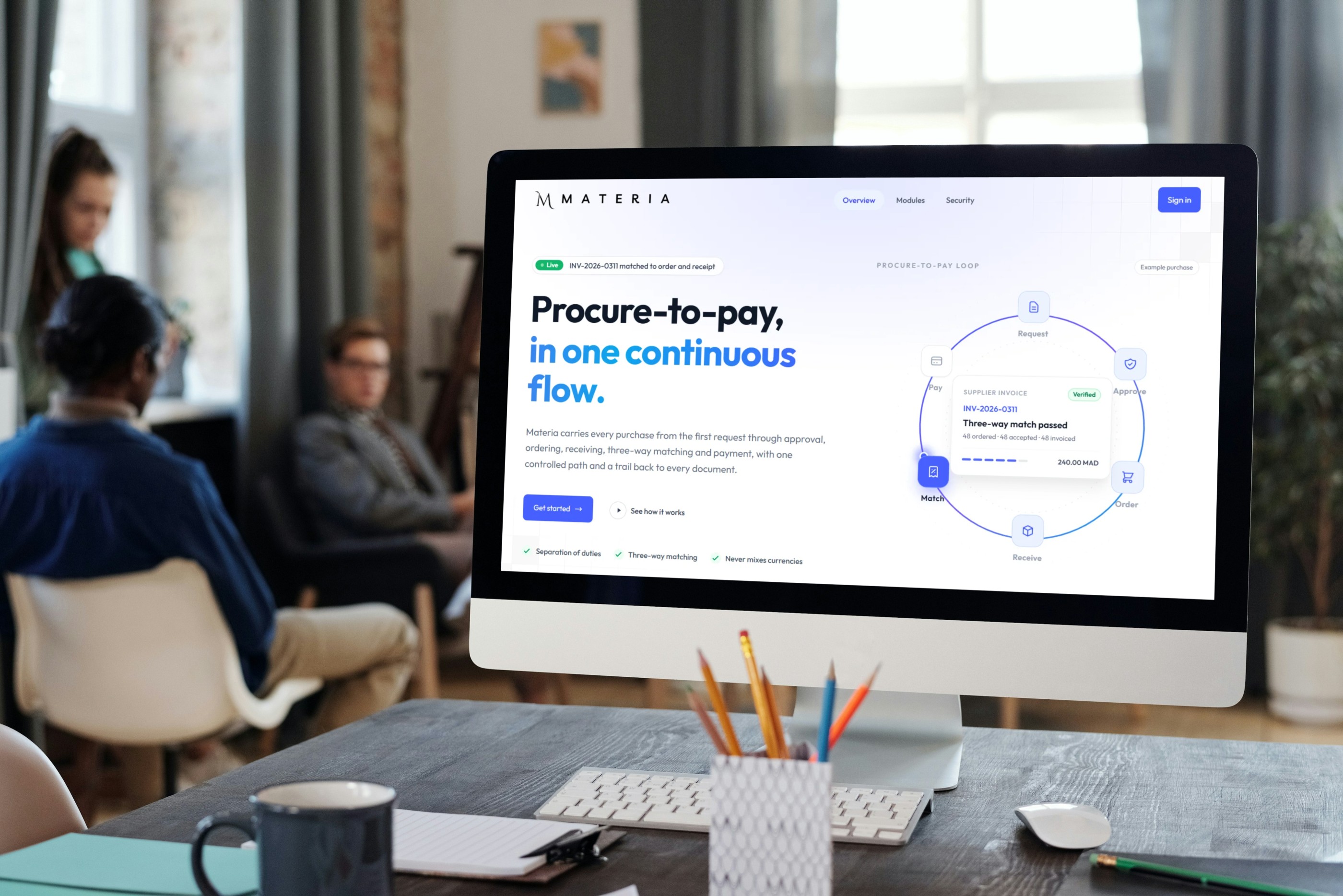
Materia is an enterprise-grade intelligent Procure-to-Pay (P2P) and Supply Chain platform designed to automate institutional purchasing workflows. It unifies the procurement lifecycle—from Purchase Requisitions and multi-level approval workflows to official Purchase Orders, Goods Receipt verification, and automated 3-Way Matching (PO ↔ Receipt ↔ Invoice). Materia ensures end-to-end traceability, prevents unauthorized spending, and guarantees strict financial auditability across the supply chain.

Problems & Solutions
Eliminates administrative bottlenecks and paperwork loss through end-to-end digitization of the purchase lifecycle with full audit trails and timestamped history.
Prevents unauthorized orders and budget overruns through a strict finite-state approval workflow governed by multi-level Role-Based Access Control (RBAC).
Mitigates stockouts and costly overstocking through real-time inventory tracking with automated replenishment thresholds and early-warning alerts.
Consolidates vendor interactions into a centralized qualified supplier directory complete with technical material catalogs, negotiated pricing, and performance ratings.
Stops billing disputes and duplicate disbursements via automated 3-Way Matching reconciliations comparing Purchase Orders, Warehouse Goods Receipts, and Invoices.
Replaces manual reporting and guesswork with real-time decision dashboards tracking purchasing velocity, delivery lead times, and category-level expenditures.
Key Features
Structured requisition drafting with sequential annual numbering (REQ-2026-XXXXX), strict finite-state transitions (Draft → Submitted → Approved/Rejected → Converted), and automatic conversion to Purchase Orders upon budgetary sign-off.
Centralized repository for product hierarchies, technical specifications, multi-tier categories, approved supplier master lists, and multi-currency exchange rates.
Warehouse intake verification cross-referencing incoming quantities and quality inspection against original purchase orders to detect shortages or defects.
Triangular reconciliation engine ensuring accounts payable disbursements only occur when invoices precisely match issued purchase orders and certified receipt quantities.
Integrated reverse-logistics workflow tracking defective merchandise returns, claims, debit notes, and replacement dispatches.
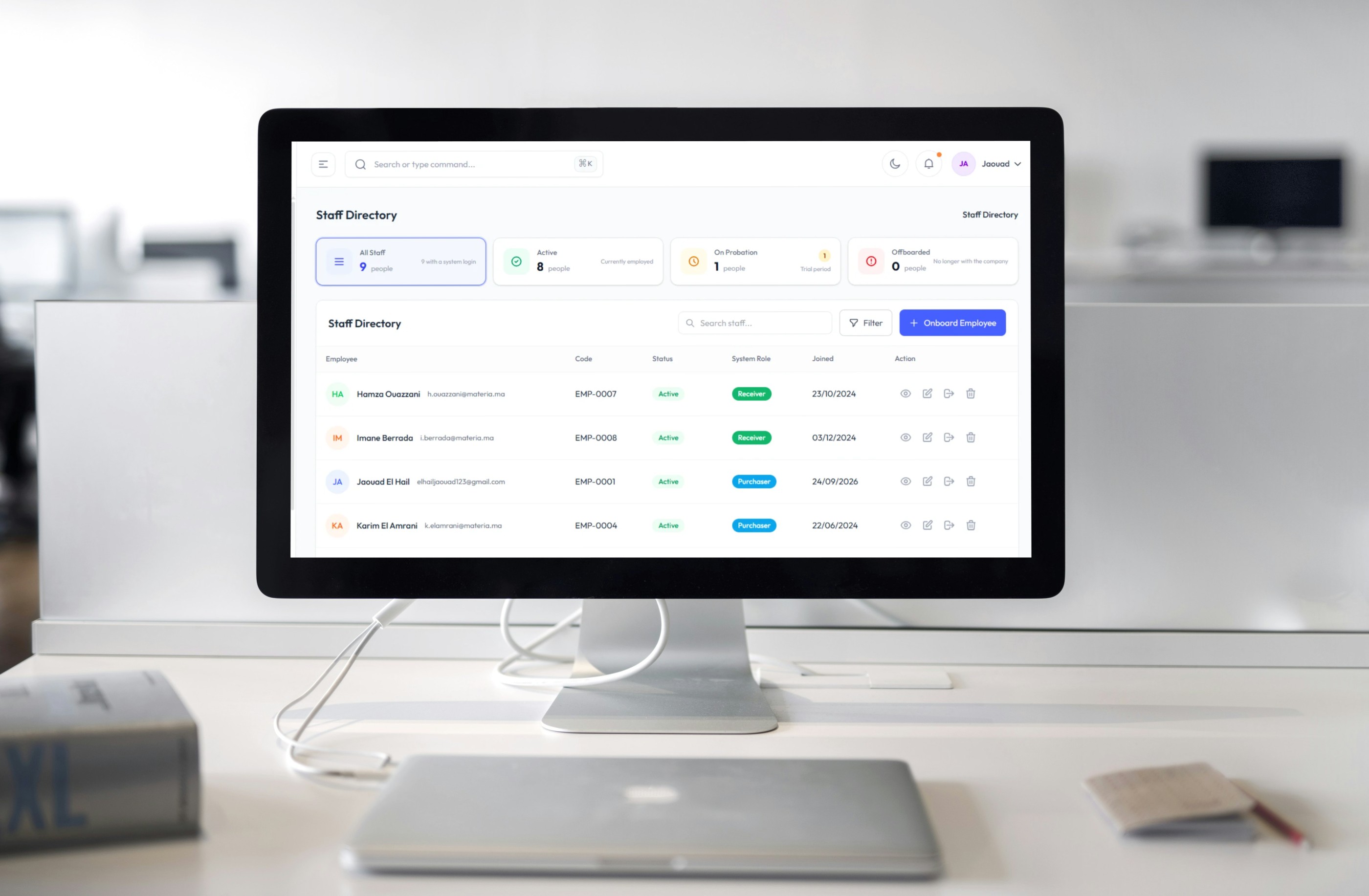
Dual-token JWT authentication (access token & rotating HttpOnly refresh cookie), fine-grained method-level RBAC (ADMIN, PURCHASER, RECEIVER), and adaptive IP rate limiting.



Tech Stack
Technologies and tools used to bring this project to life
My Role
My contributions and responsibilities in this project
Lead Full-Stack Engineer & Cloud Architect
- Modular Hexagonal Architecture : Engineered the backend as a modular monolith with 11 isolated Bounded Contexts using Domain-Driven Design (DDD), a centralized API Gateway, and hybrid event-driven communication via Spring Events and Apache Kafka.
- Microservices Migration : Architected the system migration toward microservices around 5 primary Bounded Contexts, preserving strict isolation between Domain, Application, and Infrastructure layers.
- Procure-to-Pay Domain Modeling : Analyzed the Procure-to-Pay business domain and modeled the end-to-end lifecycle: Purchase Requisition → Purchase Order → Goods Receipt → Vendor Invoice → 3-Way Matching → Payment, with comprehensive Return to Vendor (RTV) handling.
- Modern Web Frontend : Developed the web application in React 19, TypeScript, and TailwindCSS, structured into 13 domain-aligned functional modules with Axios and React Router.
- Cloud DevOps & Automated Quality : Containerized the platform with Docker (4 compose profiles), provisioned AWS cloud infrastructure with Terraform (ECS Fargate, RDS, S3/CloudFront, ALB), automated CI/CD via GitHub Actions with OIDC, and guaranteed code quality through unit tests, integration tests with Testcontainers (PostgreSQL 16), and JaCoCo test coverage.